

A computational model of human physiology.
Nefesh is Electrokare's ECG foundation model, trained on millions of waveforms to derive clinical measurements directly from the body's electrical signal.

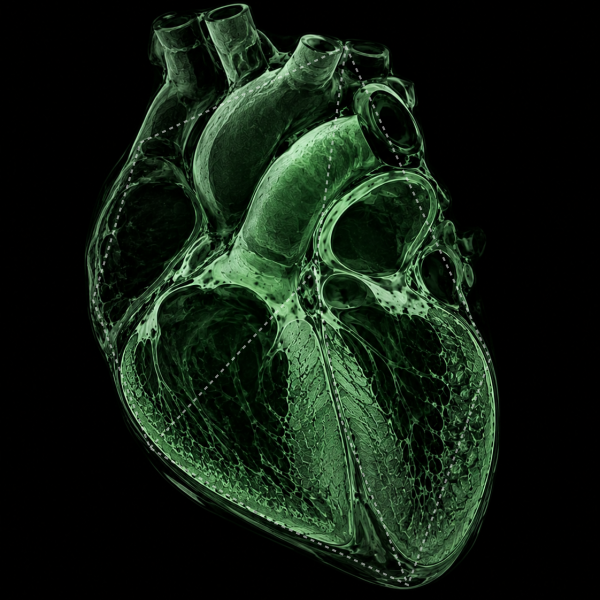

Nefesh
Every product is the same model, asked a new question.
A foundation model of physiology doesn't get rebuilt for each clinical question. It gets asked one, and each new read builds on what came before.
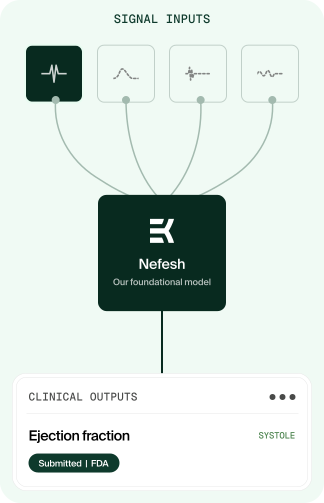
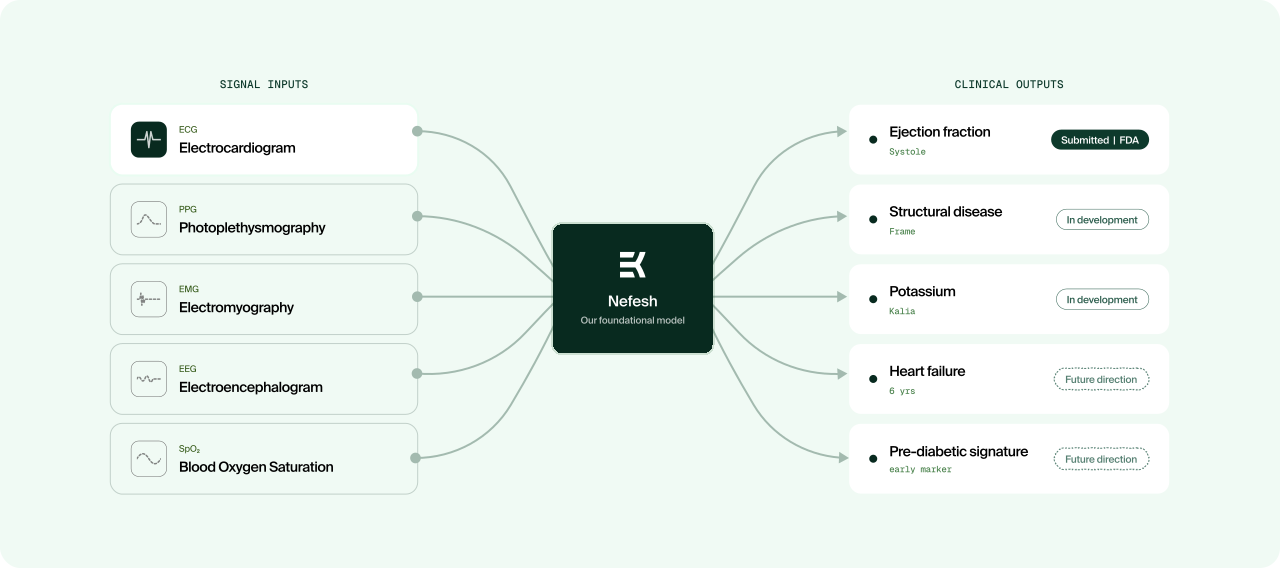
Architecture
A model of physiology, not a detector of one thing.
Most medical AI is built for a single question: one model, one answer. Nefesh is built the other way around.

One model, many reads
Ejection fraction, structural heart disease, and potassium all come from the same foundation, not three separate tools.

New reads compound
Each capability builds on the representation already learned, rather than starting from zero.
%201.svg)
Validated per question
A shared model doesn't mean shared proof every read carries its own evidence and its own regulatory status.
Fine-Tuning
Learn once.
Adapt everywhere.
New capabilities fine-tune from Nefesh's existing representation, cutting the data and development time each one needs.
Traditional AI
Nefesh
Models needed
One model per task
One foundation model
Training approach
Train from scratch
Fine-tune for new tasks
Labeled data required
High
Low
Development time
Longer
Faster
Generalization
Task & dataset specific
Stronger across tasks
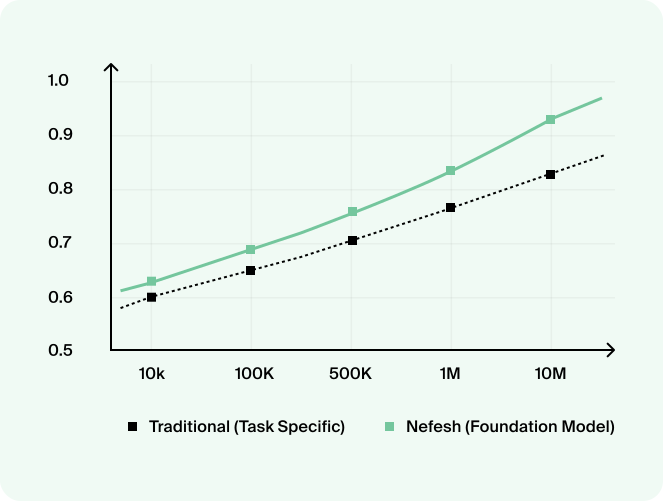
Scaling
Better data. Better representations.
As training data grows, the model learns richer physiological patterns and improves across downstream tasks
Capabilities
One representation.
Growing capabilities.
A single physiological representation powers multiple prediction heads today, with many more to come.
%201.svg)
LVEF
Detect reduced ejection fraction from ECG signals.

Serum Potassium
Estimate potassium levels from cardiac electrical patterns.

Cardiac Structure
Assess chamber size, wall thickness, and structural remodeling.

ECG Interpretation
Identify rhythm and conduction abnormalities.

Future Biomarkers
Expanding toward new clinically relevant biomarkers.
BenchMark
Evaluated across downstream tasks.
Every capability is benchmarked independently against clinically relevant evaluation metrics.
Result
AUROC
0.963
Sensitivity
0.914
Specificity
0.889
PPV
0.453
NPV
0.990